

The novelty of an amusement park is a sign of cultural leisure, curiosity, and perhaps even indulgence. From the Roman Coloseum to Anaheim’s Disneyland, humans have always loved a good immersive experience.
While so many amusement parks continue to be a beloved destination for millions of people worldwide (Disneyland averages 47,000 visitors per day!), not all parks can withstand the test of time, and many have closed their gates permanently.
Whether it was the not-so-kid-friendly alligator rides, the potential brain injury from the 360 degree loop water slide “Cannonball Loop”, or the wild and exotic animals without enclosures–the real reasons why these amusements parks closed down may never be really known.
The nostalgia of these parks lives on, often in photos, personal stories, and sometimes…lawsuits. In this article, we will take a trip down memory lane and explore some of the amusement parks that have closed down over the years, their histories, and the tales that live on.
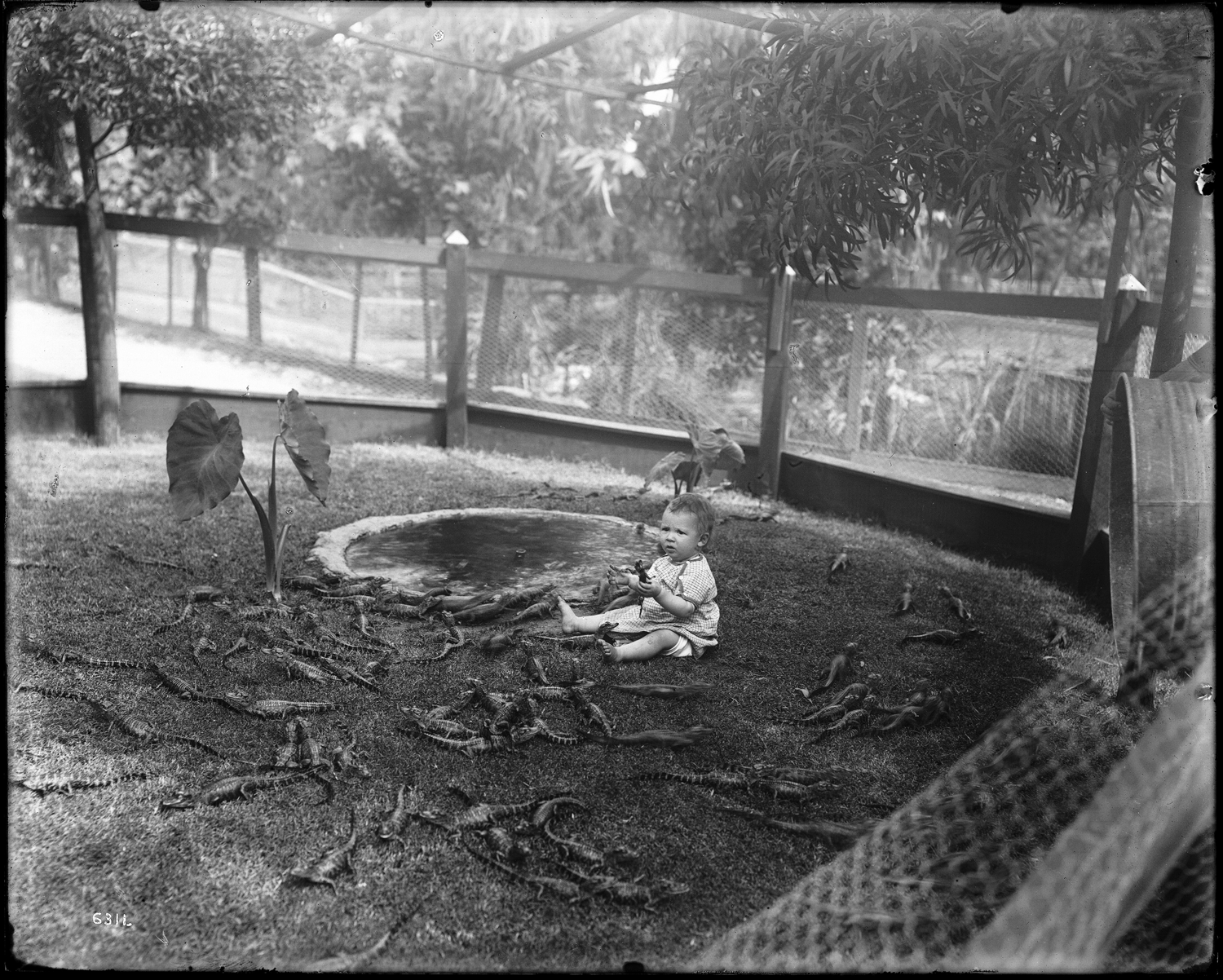
Los Angeles Alligator Farm (1907-1953)
Believe it or not Los Angeles had an alligator farm you could visit, and dare I say, ride alligators. You don’t really think of an alligator as a ridable animal–and as it turns out–they’re not.
Opening in 1907, the Los Angeles Alligator Farm was the creative brain child of Francis “Frank” Earnest and “Alligator Joe” Campbell. The Farm had up to 70 alligators at a time, and over the years added other reptiles, including snakes, lizards, turtles and tortoises.
Visitors came for the carriage rides, the gator chutes, or for the souvenir shop which boasted alligator-skin handbags and wallets. In its early years, visitors could even purchase live baby alligators to take home as pets.
Some of its famous rides included the aforementioned alligator rides, where children were placed on the backs of large, saddled alligators for photo opportunities. The gator chutes cost visitors 25-cents to watch a trained alligator climb up and down a 16-foot metal ramp, pictured below.
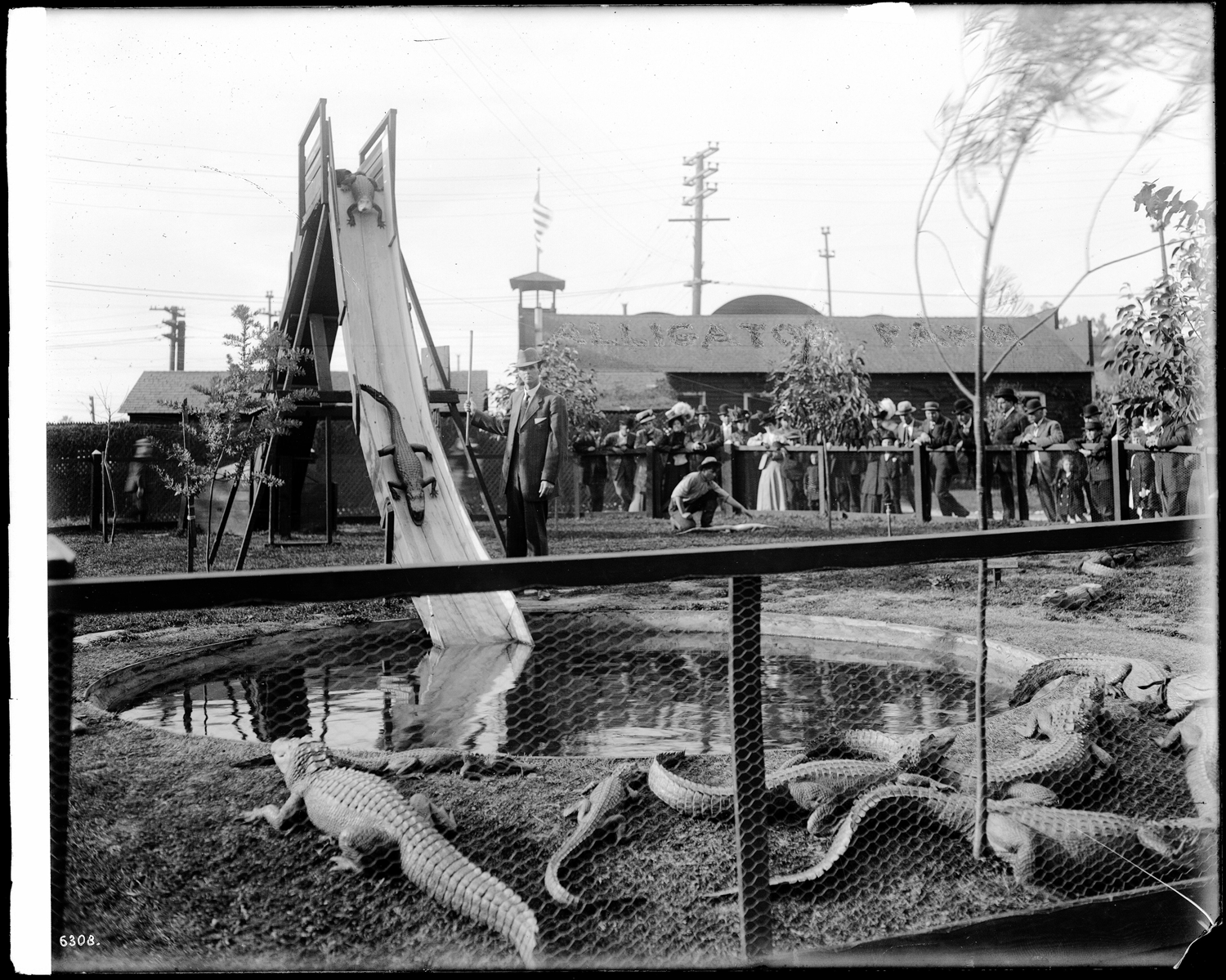
Despite its lax safety standards, there were no recorded visitor deaths at the park, although there were plenty of trainer injuries. Handlers and staff frequently experienced severe injuries, including lost fingers, severe bites and near fatal snake bites.
The original Los Angeles location was situated in the Lincoln Heights area, located at 3627 N. Mission Road right next door to the Los Angeles Ostrich Farm and Lincoln Park, but closed in 1953 due to increasing competition in the amusement industry. The Alligator Farm moved to a new location in Buena Park right across the street from Knott’s Berry Farm, but finally closed its doors in 1984. All remaining alligators were relocated to a private farm in Florida.
The Los Angeles Alligator Farm was an unusual amusement park that operated in the early 20th century, a time in history where almost anything was possible.
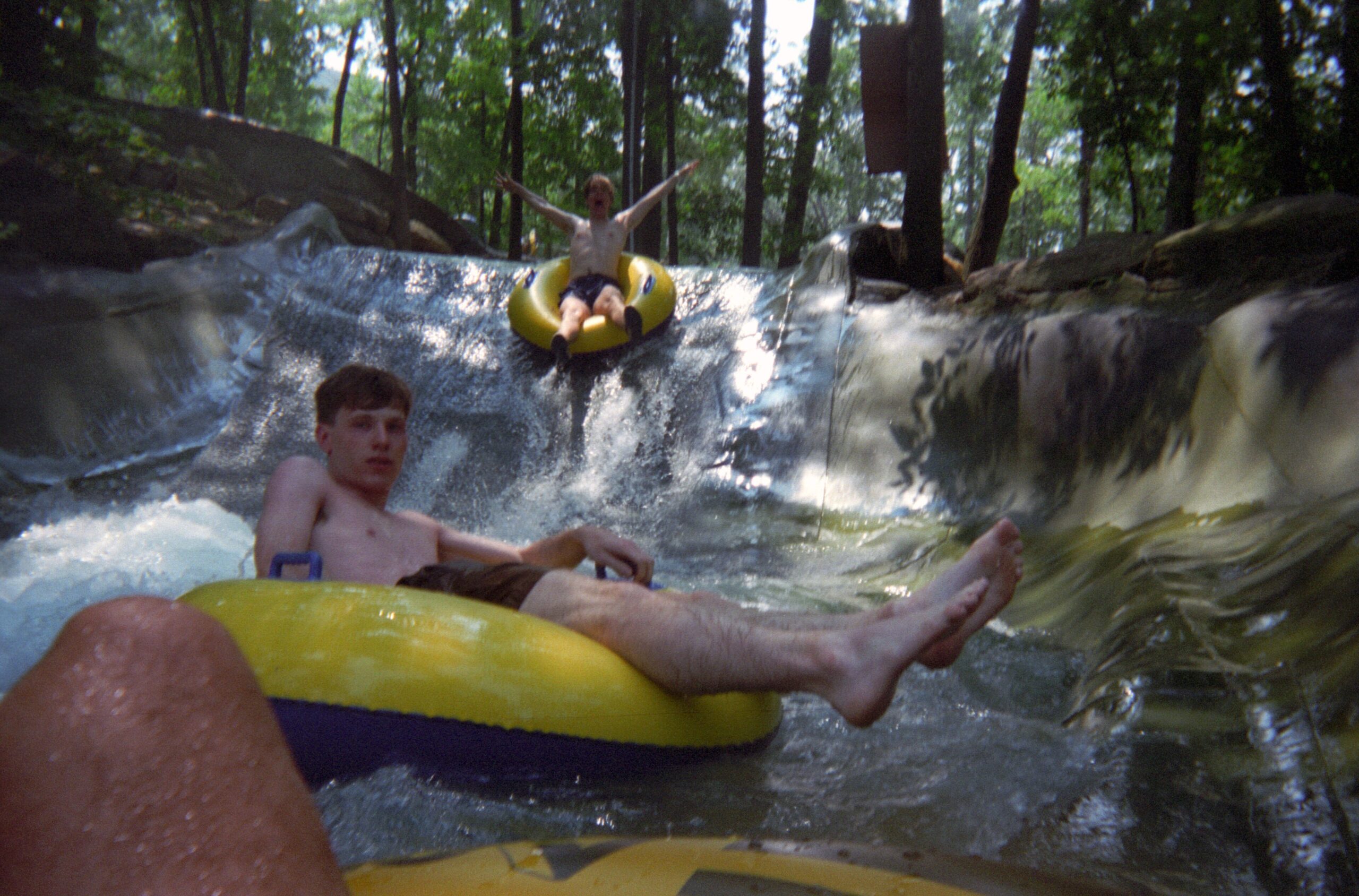
Action Park
Action Park, also known as ‘Class Action Park’ and ‘Accident Park’, was a notoriously anything-goes amusement water park located in Vernon, New Jersey. Opening in 1978, the park was the creative endeavor of former Wall Street stock trader Gene Mulvihill who dreamed up water slides and experiences, often drawing them on paper, despite no formal engineer training. The slides were sometimes a work in progress, such as the infamous Cannonball Loop slide, which had to be reworked after employees who tested the slide gashed in their teeth and jaw, or simply got stuck in the slide.
Mulvihill was known for his hands-off management style, which allowed for many safety violations and injuries to occur, and the park quickly became a hangout spot for teens with little to no parental supervision. Some of its most dangerous and popular attractions were the “Cannonball Loop,” a looping water slide that frequently injured riders, as well as a variety of other thrill rides such as the “Tarzan Swing” which dropped swimmers into a freezing pool of spring-fed water often causing shock, a wave pool (known as ‘grave pool’ that drowned several people, and “Alpine Slide,” which sometimes flung people into the air or off track, also causing one tragic death.
After multiple lawsuits and a decline in attendance, the park was forced to close in 1996. Despite its controversial history, the park remains a cult favorite among former visitors and is the subject of a 2020 HBO Max documentary titled “Class Action Park.” Altogether, there were six recorded deaths at the park.
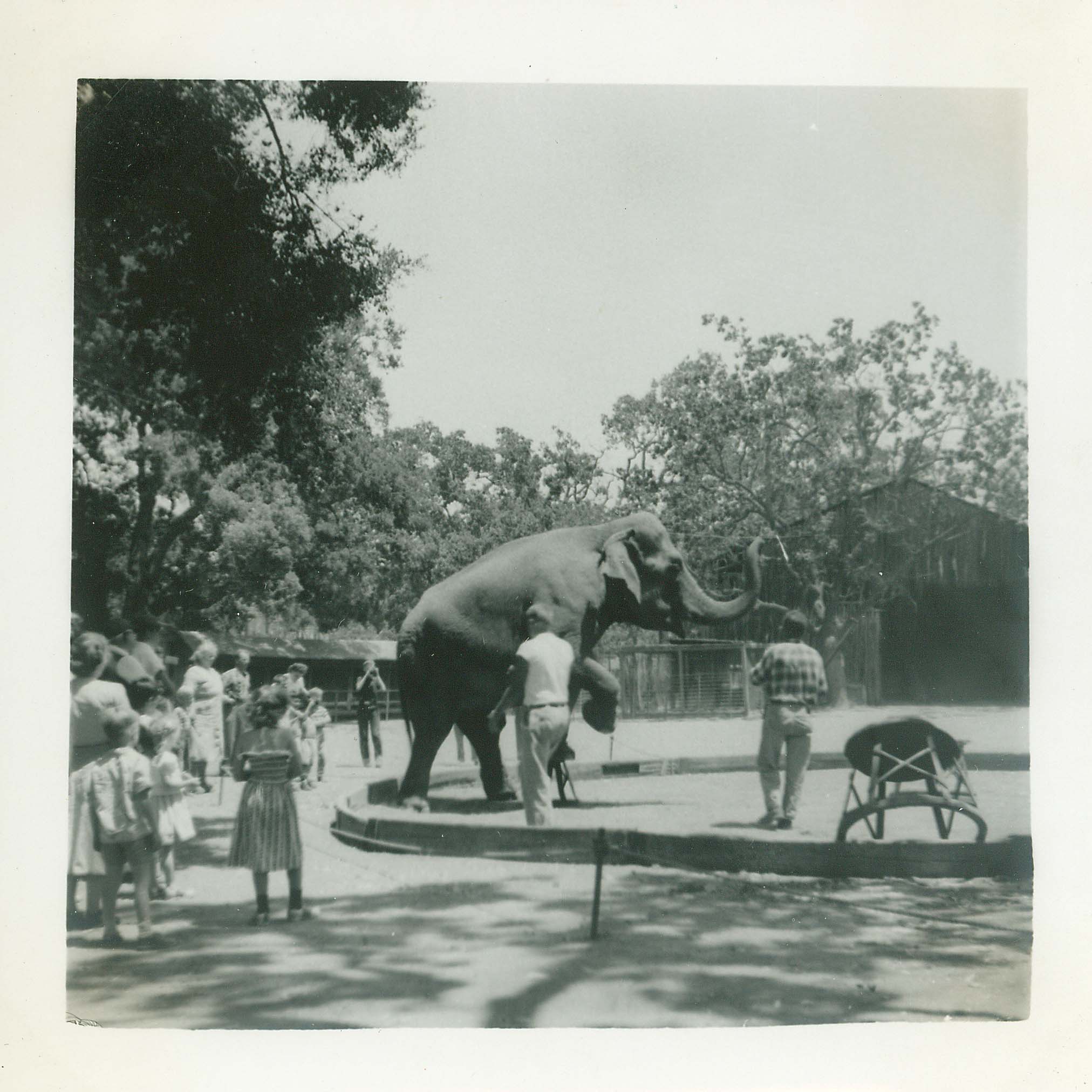
Jungleland in California
Jungleland was created initially as a private zoo and training facility in 1926 by Universal Studios employee Louis Goebel, but turned into a full-fledged wild animal theme park. Located in Thousand Oaks, California, the park operated from 1926 to 1969 and was famous for its live animal shows, including performances by lions, tigers, elephants, and other exotic animals. At its height the park encompassed 170 acres right in Thousand Oaks.
Visitors to Jungleland were able to have close encounters with wild and exotic animals on the miniature train ride, an elephant ride, and a petting zoo, as well as enjoyed live animal shows. Several TV shows and movies filmed at Jungleland, including Tarzan, The Adventures of Robin Hood and Birth of a Nation.
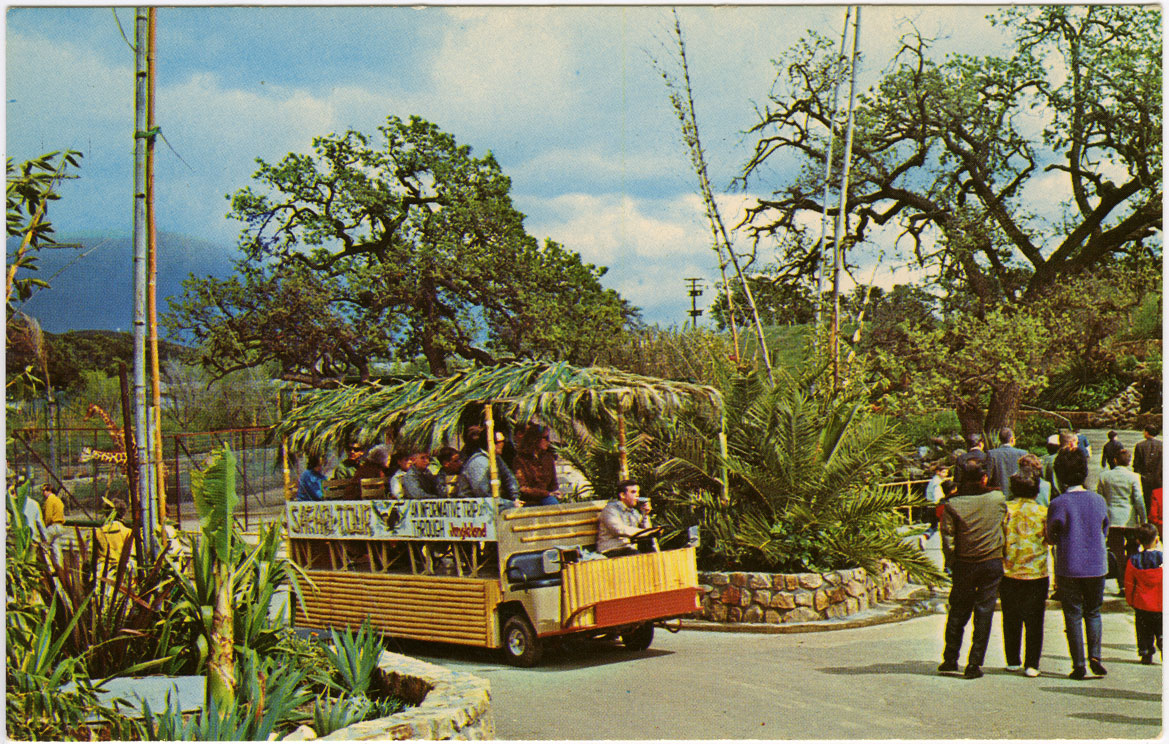
Jungleland was a popular attraction during its time, but it eventually struggled with financial difficulties and the changing attitudes towards the use of wild animals in entertainment. By 1969, the park finally closed its doors for good, and many of its animals were sold or relocated to other zoos and sanctuaries. Today, the site of the former park is home to a shopping center and residential neighborhoods.
The Land of Oz
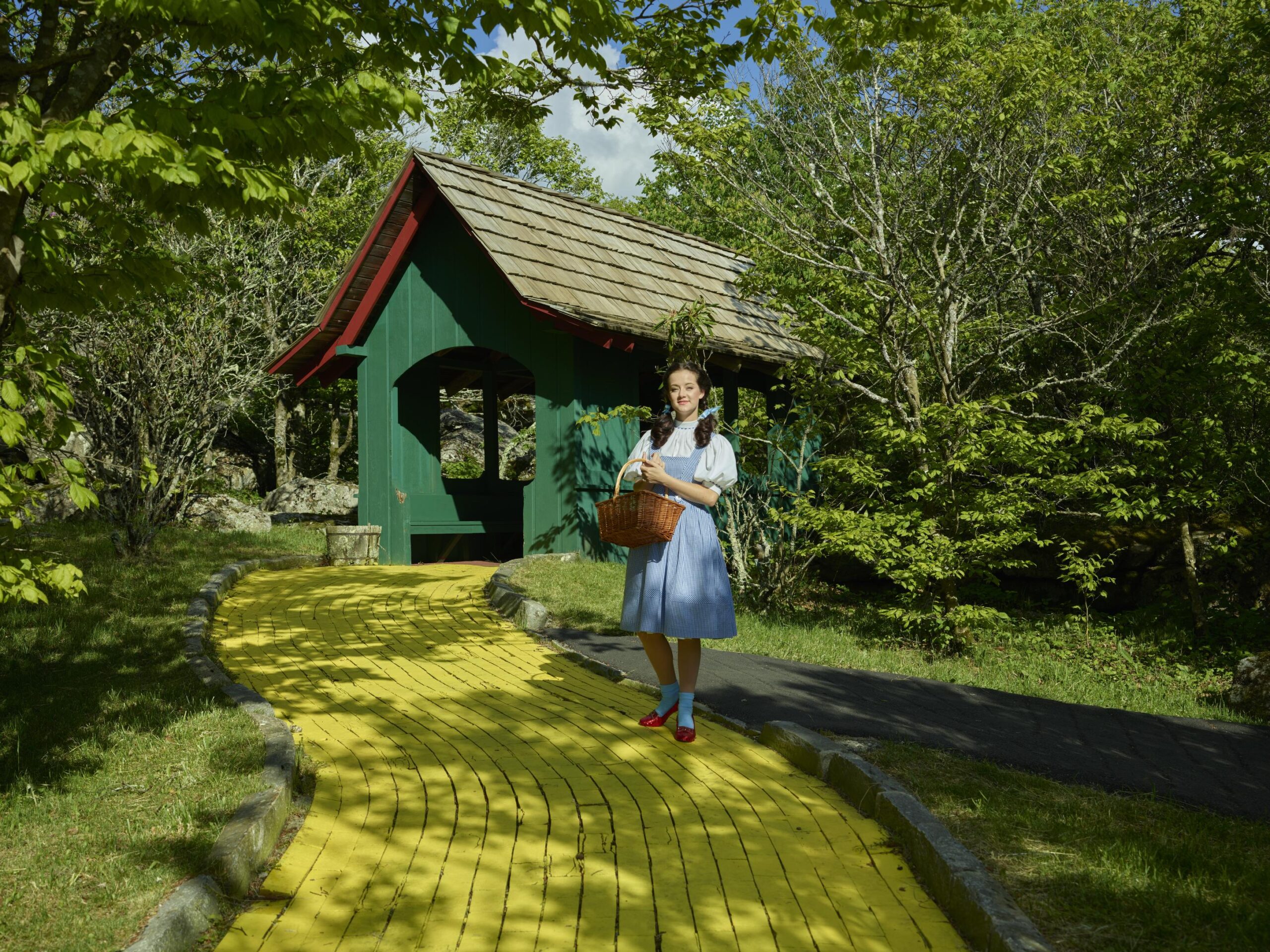
Who knew there was a Wizard of Oz theme park in North Carolina?! Opening in 1970, the Land of Oz brought the L. Frank Baum novel to life in the resort town of Beech Mountain, North Carolina. The theme park was operational until it closed in 1980, but there were hints it would re-open in 2026.
The Land of Oz had a 44,000 yellow brick road, nine Dorothy’s, four scarecrows, four tin men, four witches and five cowardly lions. There was a hot air balloon ride, a tornado and Emerald City. Visitors to the park would experience the theme park as if they were Dorothy, traveling from the tornado through the lands to the Emerald City.
Fun Fact: on opening day June 15, 1970 actress Debbie Reynolds cut the ribbon with her daughter Carrie Fisher, who would go on to become Princess Leia in Star Wars. Over 400,000 people visited the park the first year.
Sadly, the Land of Oz suffered some setbacks throughout the ’70s, including a fire that destroyed the amphitheater and surrounding gift shops. Vandalism and theft from the park’s museum, including Judy Garland’s Dorothy dress, left the park in disarray, leading to its closure in 1980.
You can still visit the Beech Mountain Land of Oz resort which puts on special one-day events where guests can experience the magical yellow brick road and more.
While these parks may have all disappeared, the stories and legends surrounding their legacy continue to captivate our attention. Most of these amusement parks wouldn’t even be able to operate in today’s world, but their history and memory serve as an example of a time where they thrived. Have you visited any of these amusement parks?